


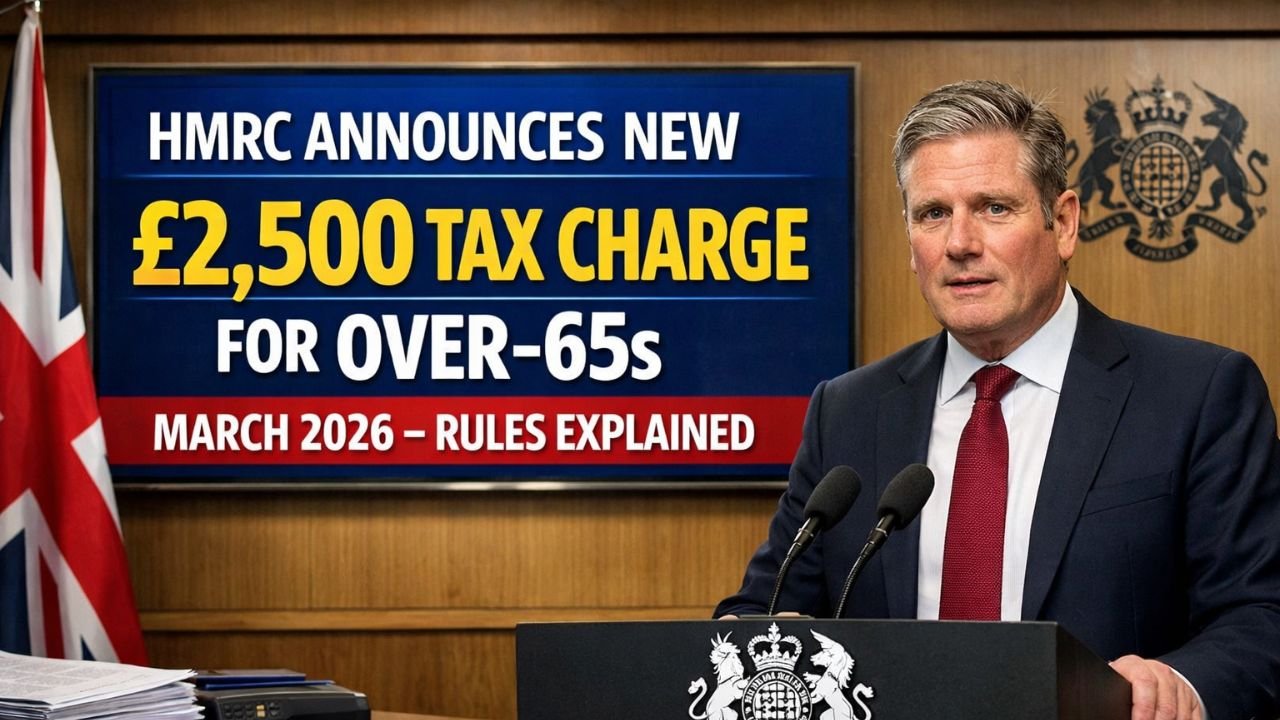
A major tax discussion has emerged in the UK after reports about a £2,500 tax charge linked to HMRC rules affecting people aged over 65. Many retirees are worried that a new tax will directly target pensioners. However, the reality is slightly different.
The HM Revenue and Customs (HMRC) tax framework for 2026 includes several financial changes that could affect older homeowners and retirees. The £2,500 figure is linked to property-related taxation and high-value asset rules, which may impact some individuals aged over 65 who own expensive homes.
Understanding the full rules is important because not every senior citizen will face this charge. The tax generally applies to specific property value bands and asset ownership conditions, rather than age alone.
What the £2,500 HMRC Tax Charge Means
The £2,500 tax charge is associated with new property-related tax measures aimed at high-value residential properties. Under the proposed structure, homes valued above a certain threshold could face an additional annual tax payment.
Although the rule is widely discussed as affecting seniors, the tax actually applies based on property value and ownership status, not strictly age. Many retirees are mentioned in discussions simply because older homeowners are more likely to own higher-value properties.
Key points include:
- The minimum annual charge begins at £2,500
- It applies to high-value residential properties
- The tax is separate from normal council tax bills
- The charge increases as property value rises
Property Value Bands and Tax Charges
The amount homeowners must pay depends on the market value of the property.
| Property Value | Estimated Annual Charge |
|---|---|
| £2 million – £2.5 million | £2,500 |
| £2.5 million – £3.5 million | £3,500 |
| £3.5 million – £5 million | £5,000 |
| Above £5 million | Up to £7,500 |
These figures represent annual charges added to existing property taxes.
Why HMRC Introduced This Charge
The government introduced this tax structure to increase revenue from high-value assets and make the tax system more balanced.
Over the past decade, property values in the UK have increased significantly. As a result, policymakers believe that owners of very expensive homes should contribute slightly more through taxation.
The policy aims to:
- Increase government revenue
- Ensure high-value property owners contribute more
- Support local government funding programs
Officials have indicated that only a small percentage of UK households will be affected.
Who Could Be Affected by the Tax
The £2,500 tax charge does not apply to every pensioner. Instead, the rule mainly affects individuals who meet certain criteria.
You may be affected if you:
- Own a property worth more than £2 million
- Are listed as the legal property owner
- Do not qualify for exemptions or deferrals
- Live in a region where the surcharge applies
For example, a retiree living in a £2.3 million property could potentially face the £2,500 yearly charge.
However, someone living in a property valued below the threshold will not be affected.
Possible Support for Older Homeowners
The government has also discussed options that may help older homeowners who are asset-rich but income-limited.
Possible relief options could include:
- Deferring the tax payment until the property is sold
- Allowing payment through estate settlement
- Special considerations for long-term residents
These options aim to ensure that elderly homeowners are not forced to sell their homes because of the tax.
Other Tax Changes Affecting Retirees in 2026
Along with the £2,500 property-related charge, several additional tax policies may influence pensioners’ finances.
These include:
- Frozen income tax thresholds
- Changes to investment income taxation
- Adjustments to dividend tax rules
For retirees who rely on investments, rental income, or savings, these policies could slightly increase overall tax obligations.
What Pensioners Should Do Now
Financial experts recommend that retirees stay informed and prepare early.
Here are some simple steps:
- Check your property value to see whether it falls near the threshold.
- Review your retirement income sources such as pensions and investments.
- Consider speaking with a financial adviser or tax specialist.
- Monitor HMRC announcements for any updates or relief programs.
Taking these steps can help homeowners avoid unexpected financial surprises.
The £2,500 HMRC tax charge discussed for 2026 is not a universal tax on pensioners. Instead, it is linked to high-value residential properties and will only affect homeowners whose property values exceed specific thresholds.
While the minimum charge begins at £2,500 annually, higher-value homes may face larger amounts depending on their valuation band. For most retirees, the tax will not apply at all.
However, homeowners with valuable property assets should stay informed about the rules, as these changes could influence long-term financial planning. Understanding the policy early will help individuals make better decisions about property ownership, retirement finances, and tax obligations.
FAQs
Do all pensioners have to pay the £2,500 HMRC tax charge?
No. The charge applies only to owners of high-value properties, typically those valued above £2 million.
Is the £2,500 tax the same as council tax?
No. It is an additional charge separate from standard council tax payments.
When will the tax take effect?
The policy discussions focus on implementation around the 2026 tax period, with exact rules depending on government updates.