


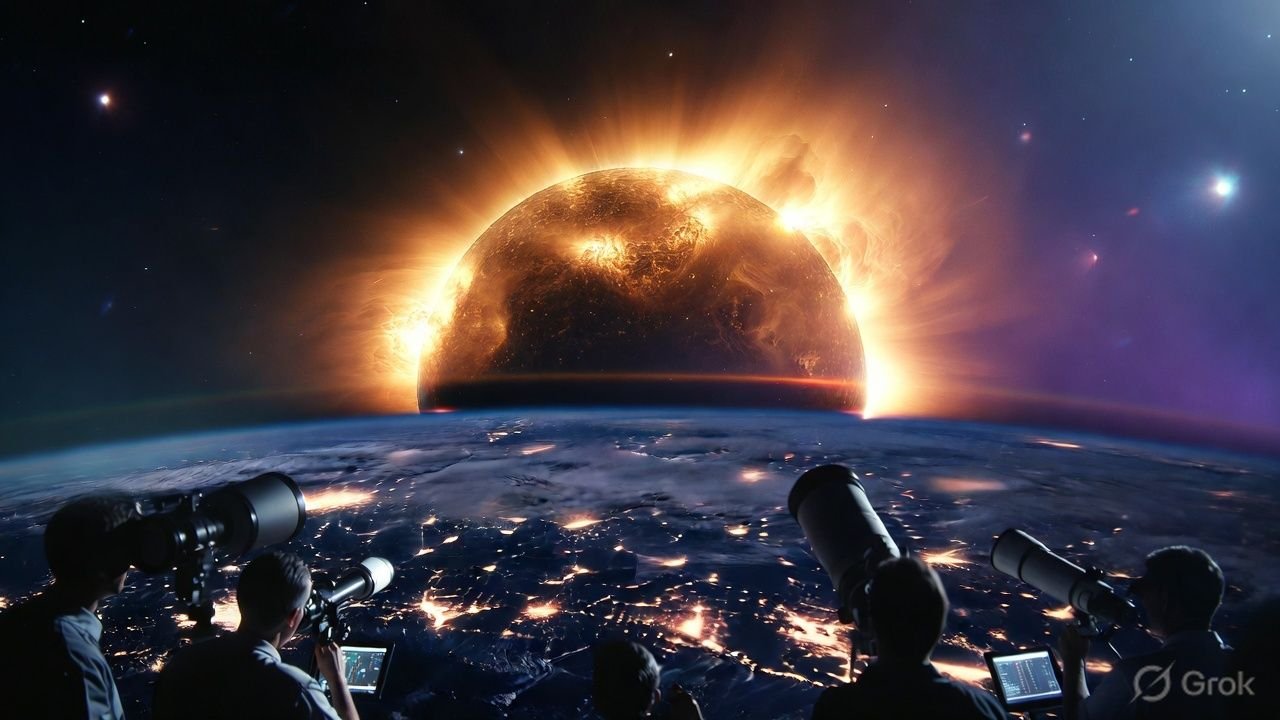
The sky is set to deliver one of the most breathtaking astronomical events of our lifetime. The longest total solar eclipse of the 21st century now has an official date — August 2, 2027.
Experts say this rare event will transform bright afternoon skies into temporary darkness for an extraordinary 6 minutes and 23 seconds, making it the longest total eclipse visible from land during this century.
With millions expected to travel into the path of totality, global excitement is rapidly building.
What Makes the 2027 Solar Eclipse So Special?
A total solar eclipse occurs when the Moon passes directly between Earth and the Sun, completely blocking sunlight for a short period. While total eclipses happen somewhere on Earth roughly every 18 months, long-lasting ones are extremely rare.
The August 2, 2027 eclipse stands out because of its remarkable duration of totality — up to 6 minutes and 23 seconds at maximum. Most total solar eclipses last only 2 to 4 minutes. This extended darkness will give scientists, photographers, and skywatchers more time to observe the stunning solar corona, the Sun’s outer atmosphere.
This exceptional duration happens due to a near-perfect cosmic alignment. The Moon will be close to its perigee (its nearest point to Earth), appearing slightly larger in the sky, while Earth will be near aphelion (its farthest point from the Sun), making the Sun appear slightly smaller. This combination allows the Moon to block the Sun for longer than usual.
Where Will the Eclipse Be Visible?
The path of totality — where the Sun will be completely covered — will stretch across parts of Southern Europe, North Africa, and the Middle East. Some of the key regions include:
- Southern Spain
- Morocco
- Algeria
- Tunisia
- Libya
- Egypt (Luxor expected to experience the longest totality)
- Saudi Arabia
- Yemen
- Somalia
Outside this path, much of Europe, Africa, and western Asia will experience a partial solar eclipse.
Key Details of the 2027 Solar Eclipse
| Detail | Information |
|---|---|
| Official Date | August 2, 2027 |
| Type | Total Solar Eclipse |
| Maximum Duration | 6 minutes 23 seconds |
| Longest Totality Location | Near Luxor, Egypt |
| Regions in Totality Path | Spain, North Africa, Middle East |
| Next Longer Eclipse | Expected in 2114 |
Why This Eclipse Is Called the Longest of the Century
Although there will be other total eclipses this century, none visible from land will exceed the 6-minute mark in the same way. The next total solar eclipse with a longer duration is expected in 2114, making the 2027 event the most significant for our generation.
Astronomers emphasize that such extended eclipses are rare because they depend on very precise distances and alignments between the Sun, Moon, and Earth.
Safety Guidelines for Viewing
Watching a solar eclipse safely is crucial. Looking directly at the Sun without proper protection can cause permanent eye damage. Always use certified solar eclipse glasses or indirect viewing methods such as a pinhole projector. Ordinary sunglasses are not safe.
The August 2, 2027 total solar eclipse is shaping up to be one of the most extraordinary astronomical events of the century. With a confirmed duration of 6 minutes and 23 seconds, wide international visibility, and optimal viewing conditions across multiple continents, this event promises to be unforgettable.
As day briefly turns into night, millions will witness a rare reminder of the powerful and precise movements of our solar system. If you are within or near the path of totality, this is a once-in-a-lifetime opportunity you will not want to miss.
FAQs
When will the longest solar eclipse of the century occur?
It will take place on August 2, 2027, with totality lasting up to 6 minutes and 23 seconds.
Where will the eclipse be fully visible?
It will be fully visible across parts of Southern Europe, North Africa, and the Middle East, including Egypt and Spain.
Is it safe to watch the eclipse without protection?
No. You must use certified solar eclipse glasses or safe indirect viewing methods to protect your eyes.