


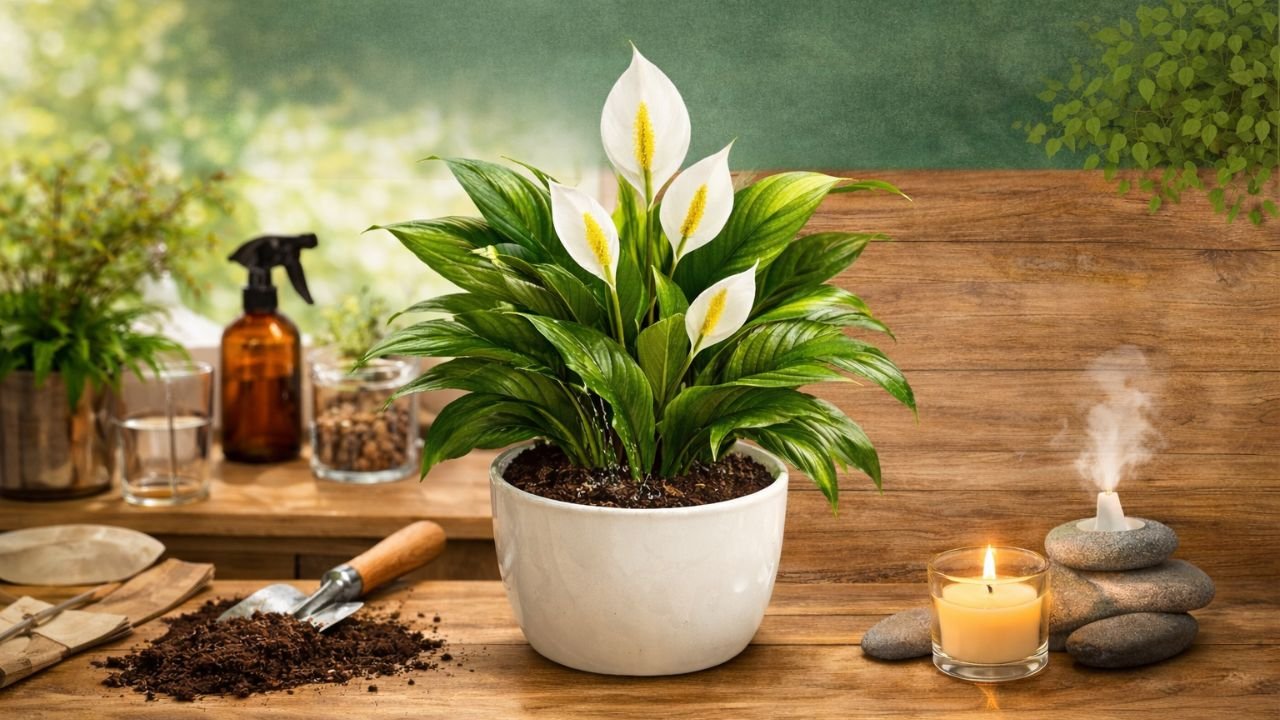
The Peace Lily (Spathiphyllum) is one of the most loved indoor plants in the world. Its elegant white flowers, deep green leaves, and easy care routine make it a perfect choice for homes and offices. Besides beauty, the plant is also known for improving indoor air quality by absorbing common airborne pollutants and dust particles.
March is a very important month for Peace Lily care because the plant begins moving from its winter rest period into active spring growth. During this time, proper watering, feeding, light, and humidity can make a huge difference in how many flowers your plant produces and how healthy it remains.
If you want bigger blooms, greener leaves, and a naturally fresher indoor environment, here is what your Peace Lily actually needs in March.
Why March Is Important for Peace Lily Growth
Peace lilies are tropical plants originally found in Central and South American rainforests. In indoor environments, they follow a seasonal growth pattern.
During winter months, the plant grows slowly because of lower light levels and cooler indoor conditions. When March arrives, longer daylight hours trigger new growth.
This is when the plant begins producing:
- New leaves
- Flower stems
- Stronger root growth
If the plant receives proper care during this period, it can bloom for 6–8 weeks or even longer.
Ideal Light Conditions in March
Light is one of the most important factors for peace lily flowering.
Peace lilies prefer bright indirect sunlight. Too little light will reduce flowering, while direct sunlight can burn the leaves.
Best indoor locations include:
- Near north-facing windows
- Near east-facing windows
- Rooms with filtered sunlight
A peace lily can survive in low light conditions, but blooming usually occurs only when the plant receives medium to bright indirect light for 6–8 hours daily.
Signs of incorrect lighting include:
- Yellow leaves (too much sunlight)
- Lack of flowers (too little light)
Proper Watering Schedule
Peace lilies prefer slightly moist soil, but they should never sit in standing water.
A common mistake people make is overwatering. Excess water can cause root rot, which damages the plant.
Watering tips for March:
- Water when the top 2–3 cm of soil feels dry
- Usually once every 5–7 days
- Use room temperature water
- Ensure the pot has drainage holes
One helpful feature of peace lilies is that they droop slightly when they need water, making it easier to know when to water them.
Humidity and Temperature Requirements
Peace lilies thrive in warm, humid environments because they come from tropical forests.
Ideal temperature range
- 18°C to 27°C (65°F to 80°F)
Avoid placing the plant near:
- Air conditioners
- Heaters
- Cold drafts from windows
Ideal humidity
Peace lilies grow best in 40%–60% humidity.
If your indoor air is dry, you can:
- Mist the leaves once or twice a week
- Use a humidity tray
- Place plants close together
This helps prevent brown leaf edges, which are often caused by dry air.
Fertilizing Your Peace Lily in March
Since March marks the start of active growth, feeding your plant is very beneficial.
Use a balanced liquid houseplant fertilizer diluted to half strength.
Recommended schedule:
- Once every 4 weeks during spring and summer
This provides essential nutrients like:
- Nitrogen – promotes leaf growth
- Phosphorus – supports flower production
- Potassium – strengthens plant health
Avoid over-fertilizing, as too much fertilizer can damage roots.
Repotting and Root Care
March is also a great time to check if your peace lily needs repotting.
Signs the plant needs a bigger pot include:
- Roots growing out of drainage holes
- Soil drying out very quickly
- Slower growth
When repotting:
- Choose a pot 2–5 cm larger than the current one
- Use well-draining indoor potting mix
- Ensure the container has good drainage
Repotting allows the roots to expand and absorb nutrients more effectively.
Key Peace Lily Care Guide for March
| Care Factor | Ideal Condition | Why It Matters |
|---|---|---|
| Light | Bright indirect sunlight | Encourages blooming |
| Watering | Every 5–7 days | Prevents root rot and drooping |
| Temperature | 18–27°C | Keeps plant healthy |
| Humidity | 40–60% | Prevents leaf damage |
| Fertilizer | Monthly balanced liquid fertilizer | Supports flower growth |
| Repotting | Every 1–2 years if root-bound | Improves root development |
How Peace Lilies Improve Indoor Air
Peace lilies are often used as natural air-purifying plants.
Their broad leaves can help trap dust and improve indoor air freshness. The plant also releases moisture through transpiration, which can slightly improve humidity levels inside a room.
Because of these benefits, peace lilies are commonly placed in:
- Living rooms
- Bedrooms
- Offices
- Bathrooms with indirect light
Besides improving air quality, their elegant white blooms add a calm and sophisticated look to indoor spaces.
Taking proper care of your Peace Lily in March can significantly improve its growth and flowering for the entire spring season.
As the plant moves into its active growth phase, providing the right balance of light, water, humidity, and nutrients is essential. Bright indirect sunlight, moderate watering every week, and monthly fertilization will encourage healthy leaves and elegant white blooms.
Checking roots and repotting if necessary also helps maintain strong plant health. With just a little attention in March, your peace lily can thrive, bloom beautifully, and continue enhancing the natural beauty and air quality of your home.
FAQs
Why does my peace lily not bloom?
Lack of blooming usually happens because the plant is not getting enough bright indirect light or proper nutrients.
How often should I water a peace lily in March?
Water the plant every 5–7 days or whenever the top layer of soil becomes dry.
Can peace lilies grow in low light?
Yes, they can survive in low light, but moderate to bright indirect light is required for regular flowering.