
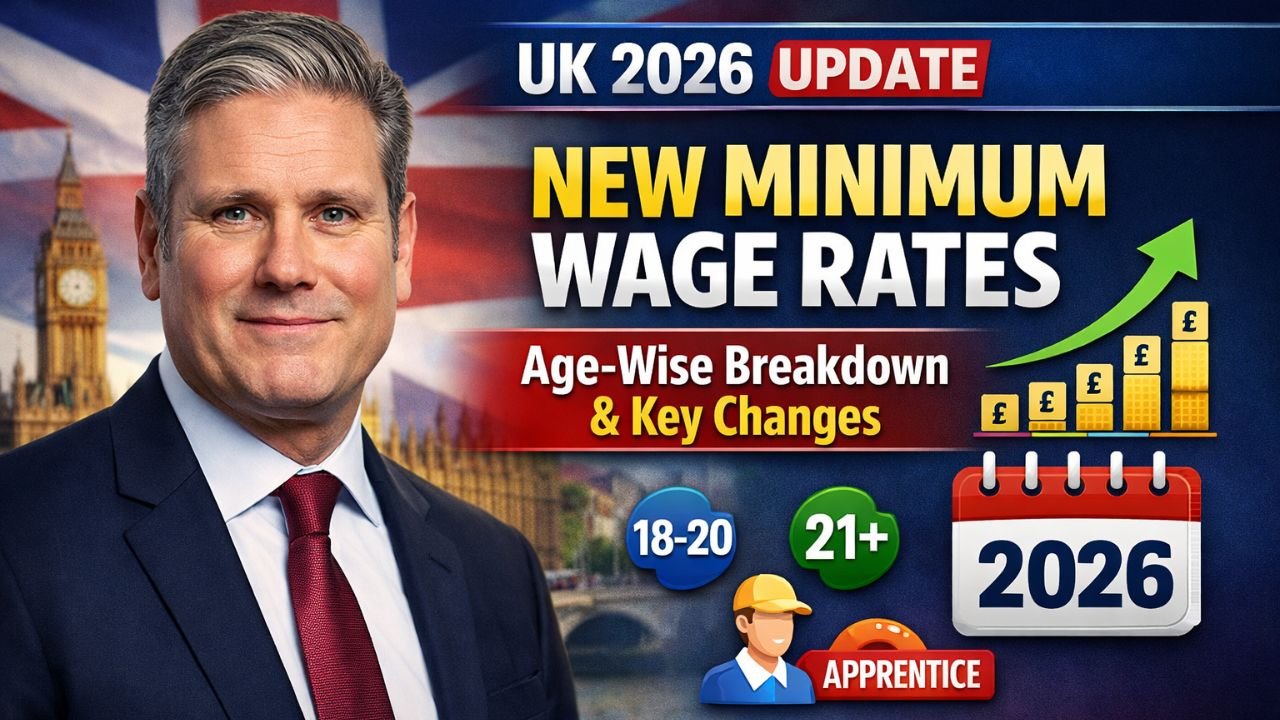
The UK government has confirmed the new National Minimum Wage and National Living Wage rates for 2026, bringing higher hourly pay for millions of workers across the country. These updated wage rates will officially take effect on 1 April 2026 and will apply to workers of different age groups, including young workers and apprentices.
The increase aims to support employees facing rising living costs and ensure fair wages across the workforce. Millions of workers in industries such as retail, hospitality, healthcare, and customer service will benefit from the minimum wage increase in 2026.
In this article, we explain the new UK minimum wage rates for 2026, how much workers will earn, and what the changes mean for employees and businesses.
New UK Minimum Wage Rates for 2026
From 1 April 2026, employers across the United Kingdom will be legally required to pay workers the updated minimum wage rates. These rates vary depending on a worker’s age and whether they are an apprentice.
UK Minimum Wage Rates 2026 (Full Breakdown)
| Age Group / Category | Hourly Rate 2025 | Hourly Rate 2026 | Increase |
|---|---|---|---|
| 21 and over (National Living Wage) | £12.21 | £12.71 | £0.50 |
| 18–20 years | £10.00 | £10.85 | £0.85 |
| 16–17 years | £7.55 | £8.00 | £0.45 |
| Apprentice Rate | £7.55 | £8.00 | £0.45 |
These new rates represent increases of between 4% and 8% depending on the age group, providing higher earnings for workers across the country.
National Living Wage for Workers Aged 21 and Over
The National Living Wage applies to workers aged 21 and above. In 2026, this rate will rise from £12.21 to £12.71 per hour.
For a full-time employee working 40 hours per week, this increase could mean an additional £1,000 or more per year in earnings. This rise is part of the government’s long-term plan to improve living standards and bring wages closer to average earnings.
Pay Increase for Workers Aged 18 to 20
Workers aged 18 to 20 will see one of the biggest wage increases in 2026. Their hourly pay will increase from £10.00 to £10.85, which is an increase of 85 pence per hour.
This change reflects the government’s effort to gradually reduce the pay gap between younger workers and the National Living Wage rate.
Wage Rates for 16–17 Year-Old Workers
For younger workers aged 16 and 17, the minimum wage will increase from £7.55 to £8.00 per hour.
Although these workers often hold part-time or entry-level jobs, the increase still represents a noticeable pay boost and helps young employees earn more while gaining work experience.
Apprentice Minimum Wage Rate
Apprentices will also receive a pay increase in 2026. The apprentice hourly rate will rise from £7.55 to £8.00.
The apprentice rate usually applies to:
- Apprentices under 19 years old
- Apprentices aged 19 or over who are in the first year of their apprenticeship
After the first year, apprentices are generally entitled to the minimum wage rate for their age group.
Why the Minimum Wage Is Increasing
The UK minimum wage is reviewed every year to ensure workers receive fair pay and that wages keep up with economic changes.
Several factors influence wage increases, including:
- Cost of living and inflation
- Average national earnings
- Employment levels
- Economic growth
The goal of the increase is to help workers manage rising costs such as housing, energy, food, and transportation.
Impact on Workers and Businesses
The minimum wage rise in 2026 will benefit millions of workers across the UK, particularly those in lower-paying sectors like retail, hospitality, and care services.
For employees, the increase means:
- Higher hourly pay
- Improved financial stability
- Better ability to manage living expenses
For businesses, however, the wage increase may lead to higher payroll costs, especially for companies with large numbers of minimum-wage employees. Some businesses may adjust prices or operational costs to manage the changes.
The new UK minimum wage rates for 2026 represent an important pay increase for millions of workers. Starting from 1 April 2026, employees across different age groups will earn higher hourly wages, with the National Living Wage rising to £12.71 per hour.
Younger workers aged 18–20 will receive the largest increase, while workers aged 16–17 and apprentices will also see a pay boost. These changes aim to support workers facing higher living costs and ensure fair pay across the UK workforce.
Overall, the 2026 minimum wage update is expected to improve earnings for millions of employees and strengthen financial security for many households across the United Kingdom.
FAQs
When will the new UK minimum wage rates start?
The new minimum wage rates will take effect on 1 April 2026 across the United Kingdom.
What is the National Living Wage in 2026?
The National Living Wage for workers aged 21 and over will be £12.71 per hour starting in April 2026.
Who qualifies for the apprentice minimum wage rate?
The apprentice rate applies to apprentices under 19 years old or those aged 19+ in the first year of their apprenticeship.