


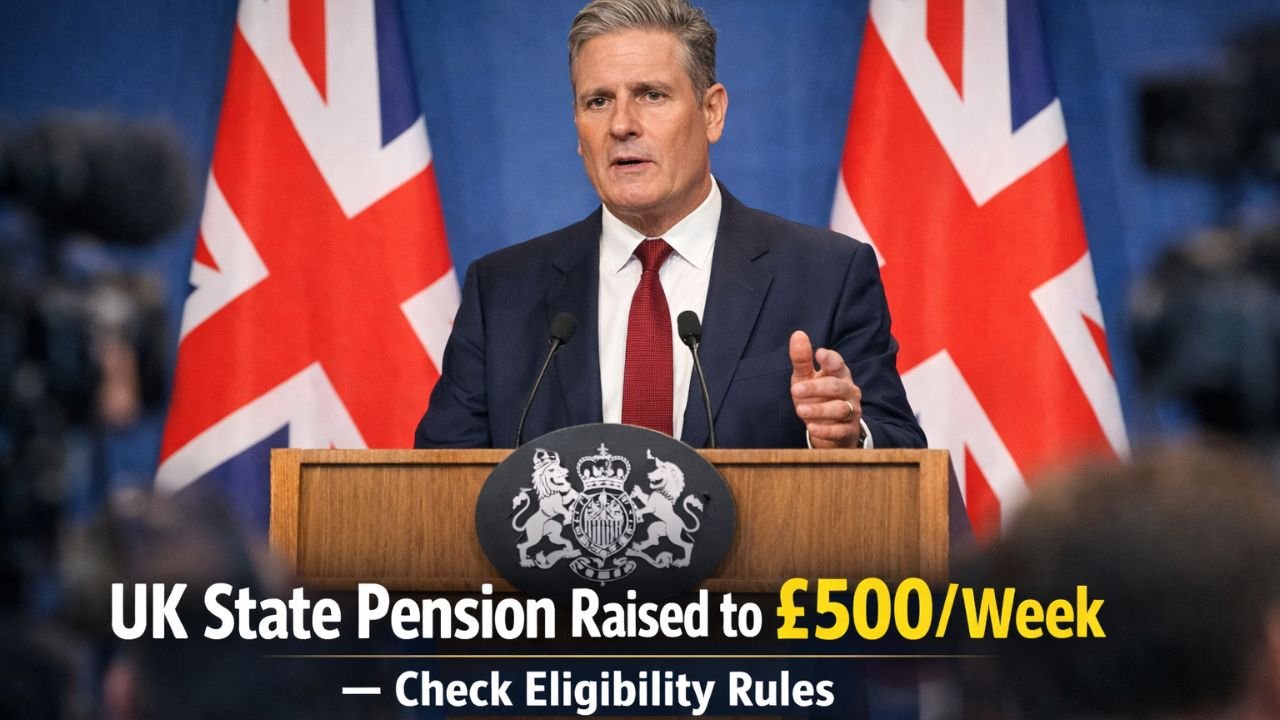
The UK State Pension is set to see changes in 2026, with many retirees curious about the latest weekly payment and eligibility rules. While some reports mention a £500 per week pension, the official basic State Pension is much lower.
Here’s a clear breakdown of what the pension increase means, who qualifies, and what you need to know to plan your retirement.
UK State Pension Increase in 2026
From 1 March 2026, the UK State Pension will be uprated to reflect inflation and wage growth. The system aims to protect pensioners’ income and ensure it keeps pace with living costs.
Although some media has mentioned £500 per week, this figure represents a combined retirement income including private pensions and savings, not the standard State Pension. The official weekly payment for the New State Pension is around £241.30, while the Basic State Pension stands at £184.90 for those on the older system.
Understanding the Weekly Pension Rates
| Pension Type | Weekly Amount from 2026 |
|---|---|
| New State Pension (full rate) | £241.30 |
| Basic State Pension (older system) | £184.90 |
| Previous year New State Pension | £230.25 |
| Previous year Basic State Pension | £176.45 |
These rates are set to help pensioners manage costs while reflecting the government’s annual adjustments.
Who Qualifies for the New State Pension?
Eligibility depends on your National Insurance (NI) record and your date of birth:
- 35 qualifying years of NI contributions or credits are needed to receive the full New State Pension.
- A minimum of 10 qualifying years is required to receive any State Pension.
- Men born after 6 April 1951 and women born after 6 April 1953 fall under the new system.
- If you have fewer than 35 qualifying years but more than 10, you will receive a pro-rated pension based on your contributions.
State Pension Age Changes in 2026
The State Pension age (SPA) determines when you can start claiming your pension:
- Currently, SPA is 66 for both men and women.
- By 2026, SPA is set to rise to 67, affecting when future retirees can claim benefits.
Planning for the pension age increase is important to ensure you don’t miss out on payments.
What Pensioners Should Do Now
- Check your NI record to confirm your qualifying years.
- Be aware that the £500 per week figure is not the basic pension.
- Consider private pensions and savings to supplement your State Pension.
- Plan your retirement with the SPA increase in mind.
The UK State Pension will see modest increases in 2026, with the New State Pension at £241.30 per week and the Basic State Pension at £184.90. The widely mentioned £500 weekly figure refers to combined retirement income, not the core State Pension. Ensuring enough National Insurance contributions and understanding the State Pension age are key to maximizing your retirement income.
FAQs
Will the UK State Pension be £500 per week from March 2026?
No. The official weekly payment is £241.30 for the New State Pension; £500 may include other income sources.
How many years of National Insurance contributions do I need for the full pension?
You need 35 qualifying years to receive the full New State Pension.
What is the State Pension age in 2026?
The SPA is 66 now and will rise to 67 in 2026 for future retirees.