


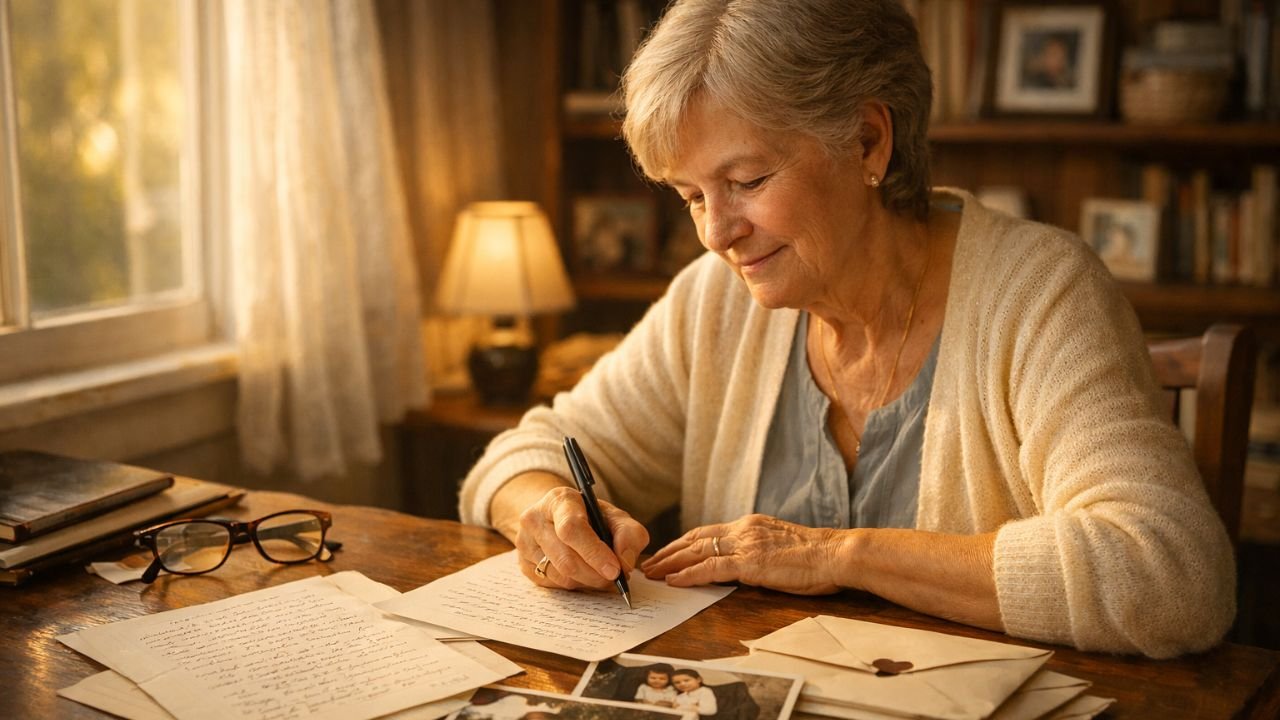
“I’m 65 and I’ve started writing letters to my grandchildren that they won’t read until I’m gone, because I realized the version of me they’ll remember will be edited by whoever tells the story, and I want at least one version to be mine.”
This thought is emotional, powerful, and very real for many families today. More older adults are now writing legacy letters to leave behind their own words, values, and memories.
These letters are not legal documents. Instead, they are personal messages filled with love, truth, family history, and life advice. In a time when families are busy and memories can fade, a letter to grandchildren becomes a way to protect one’s voice for the future.
What Is a Legacy Letter?
A legacy letter is a personal written message that shares the things that matter most. It can include childhood memories, major life lessons, family traditions, regrets, hopes, blessings, and advice for future generations.
Unlike a formal will, a legacy letter is not about money or property. It is about emotional inheritance. It gives grandchildren a chance to know the real person behind the family stories.
Why This Trend Is Growing
This practice is becoming more meaningful as the world’s older population continues to rise. By 2030, 1 in 6 people worldwide will be aged 60 or older. In the United States, the number of people aged 65 and above reached 61.2 million in 2024. These figures show why more families are thinking seriously about memory, identity, and legacy.
Another reason is loneliness. Around 1 in 6 people worldwide experience loneliness, and older adults are among the groups most affected. Studies also show that loneliness is linked to serious health risks and hundreds of thousands of deaths each year.
Writing letters can help older adults feel connected, purposeful, and emotionally present in the lives of their grandchildren.
How Writing These Letters Helps
Writing letters to grandchildren is not only meaningful for the reader. It can also help the writer. Reflective writing and storytelling can support emotional well-being, strengthen autobiographical memory, and give older adults a sense of peace.
These letters often answer important questions:
Who was I really?
What did I learn?
What do I hope you never forget?
That is why many people see legacy writing as a way to keep their truth alive.
Key Facts at a Glance
| Topic | Details |
|---|---|
| Legacy letter | A personal, non-legal letter sharing values, memories, and life lessons |
| Global ageing | By 2030, 1 in 6 people worldwide will be aged 60+ |
| Older adults in the U.S. | 61.2 million people were aged 65+ in 2024 |
| Loneliness rate | Around 1 in 6 people globally experience loneliness |
| Why it matters | Legacy letters preserve voice, truth, and family history |
| Main purpose | To leave behind personal stories, guidance, and emotional connection |
Why These Letters Matter to Grandchildren
A grandchild may not remember every visit, every phone call, or every family gathering. But a letter written in a grandparent’s own words can last for decades. It can be opened during grief, confusion, celebration, or a major life milestone.
That letter becomes more than paper. It becomes a conversation across time.
Writing legacy letters at 65 is not about fear. It is about clarity. It is about choosing to leave behind your own version of your life instead of letting others define it later.
A letter to grandchildren carries voice, memory, wisdom, and love in a way that few things can. In a world where stories are often retold by others, these letters give grandparents the power to say, “This is who I was, this is what I learned, and this is what I want you to carry forward.”
FAQs
What should a legacy letter include?
A legacy letter can include life lessons, family memories, personal beliefs, hopes for the future, and advice for children or grandchildren.
Is a legacy letter the same as a will?
No. A will handles legal and financial matters, while a legacy letter focuses on emotions, values, and family stories.
Why are more grandparents writing these letters now?
Because people want to preserve their real voice, stay connected with family, and leave behind memories that future generations can read and cherish.