
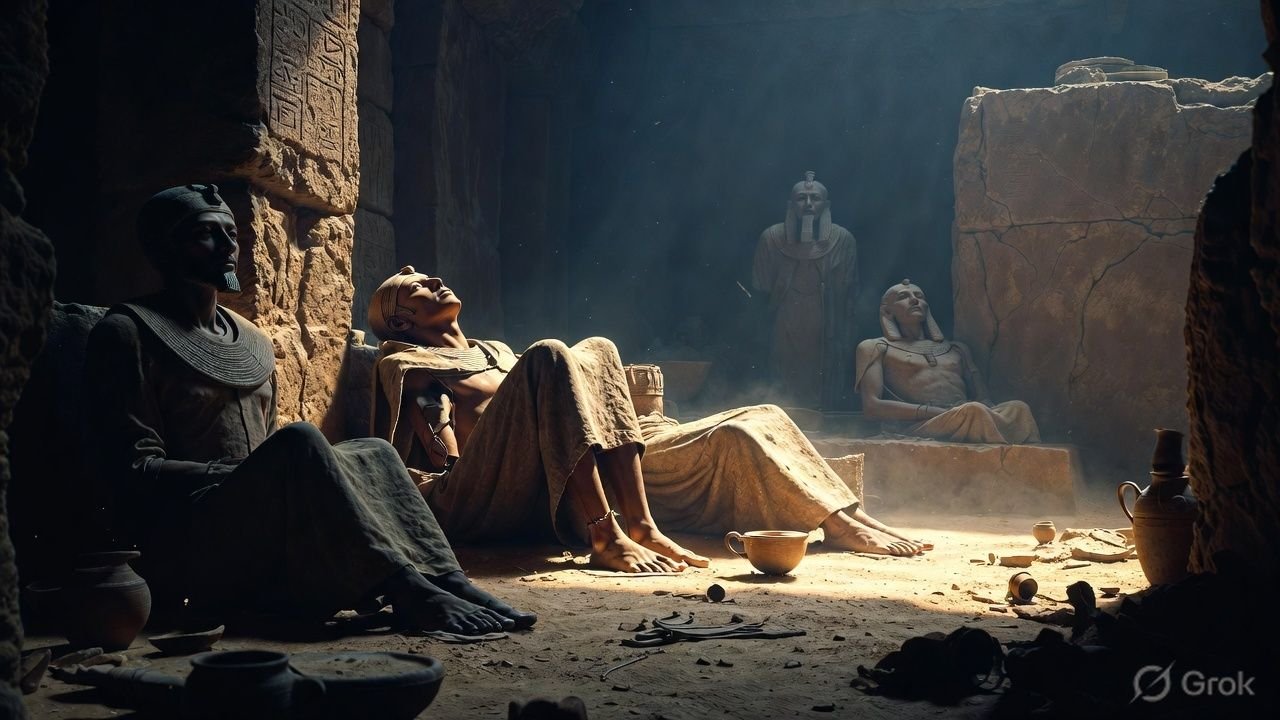
In a historic breakthrough, archaeologists have uncovered a 2,600-year-old sealed tomb in central Italy, revealing the remains of four individuals along with over 100 ancient artefacts.
This untouched burial site provides a unique insight into the Etruscan civilisation, an advanced society that existed long before Rome and whose culture influenced early Italian history.
Location and Excavation of the Tomb
The tomb was found in the San Giuliano necropolis, an ancient burial area located about 70 kilometres northwest of Rome. Archaeologists identified the site during systematic surveys and found the tomb’s entrance blocked by a large stone slab, which had remained intact for millennia.
The tomb remained completely undisturbed for approximately 2,600 years, making it a rare find. Most tombs in the region had been looted long ago, destroying the original placement of skeletons and grave goods.
What Was Found Inside the Tomb
Inside the chamber, researchers discovered:
- Four human skeletons, laid on carved stone beds
- Over 100 grave goods, including ceramic vessels, iron weapons, bronze ornaments, and silver hair accessories
- The skeletons are believed to represent two male-female pairs, although detailed analysis is ongoing
- Artefacts included items of both practical use and symbolic significance, reflecting Etruscan beliefs about the afterlife
The careful arrangement of skeletons and items indicates that the individuals may have held high social status within their community.
Significance of the Discovery
This tomb is extraordinary due to its pristine condition. Being untouched for thousands of years allows archaeologists to study the burial rituals, artefact placement, and funerary customs of the Etruscans in their original context.
The Etruscan civilisation, which thrived from the 8th century BCE to the 3rd century BCE, had a profound influence on Rome’s religion, art, and societal structure. Discoveries like this shed light on:
- Funerary practices and rituals
- Social hierarchy and family structure
- Daily life and material culture
- Beliefs about the afterlife
Information : Key Details of the Tomb
| Key Detail | Information |
|---|---|
| Location | San Giuliano necropolis, central Italy |
| Distance from Rome | 70 km northwest |
| Age of Tomb | 2,600 years old |
| Civilisation | Etruscan |
| Number of Individuals | Four skeletons |
| Artefacts Found | 100+ items: pottery, weapons, ornaments, accessories |
| Preservation Condition | Fully sealed and untouched |
| Arrangement | Skeletons on carved stone beds |
| Initial Interpretation | Possibly two male-female pairs |
The opening of this 2,600-year-old Etruscan tomb provides an unprecedented glimpse into an ancient world. Its intact skeletons and artefacts allow researchers to study burial customs, social status, and the material culture of the Etruscans in their original arrangement.
Continued research will likely reveal even more about these four individuals, their society, and the beliefs and practices that shaped their lives and deaths.
FAQs
Why is this Etruscan tomb discovery so important?
The tomb remained sealed for 2,600 years, preserving skeletons and artefacts exactly as they were placed, which is extremely rare in archaeology.
What kinds of artefacts were found inside?
Archaeologists discovered over 100 items, including ceramic vessels, weapons, bronze ornaments, and silver accessories, reflecting social status and religious beliefs.
Who were the people buried in the tomb?
The tomb contained four skeletons, possibly representing two male-female pairs, although detailed scientific analysis is still ongoing.